Views: 0 Author: Site Editor Publish Time: 2025-11-28 Origin: Site


Non-woven fabrics are transforming industries worldwide. From medical supplies to automotive parts, these versatile materials are everywhere.
As demand grows, manufacturers must choose the right non-woven fabric production line to stay competitive. The efficiency and quality of the production process directly impact the final product.
In this article, we will explore the different types of production lines available, highlighting key factors to consider for optimal performance and cost-effectiveness.
The process of creating non-woven fabrics involves multiple stages that must be carefully managed to ensure consistency and quality. These stages are essential for ensuring that the final fabric meets the required specifications:
Fiber Feeding: Raw fibers, often made from materials like polypropylene or polyester, are fed into the production system. The type and quality of the fibers directly affect the characteristics of the finished product.
Web Formation: The fibers are then laid down to form a web using methods like carding, spunbonding, or air-laying. The web's structure is crucial for determining the fabric's strength and other key properties.
Bonding: In this stage, the fiber web is bonded to form a cohesive fabric. This can be done using thermal bonding (heat), chemical bonding (adhesives), or mechanical bonding (e.g., needle punching).
Finishing: After bonding, the fabric undergoes finishing treatments like calendaring, embossing, or coating to improve its appearance, texture, and functionality.
Unlike traditional textile manufacturing, which requires spinning and weaving fibers, non-woven fabric production relies on these direct bonding techniques, resulting in faster production times and greater versatility in fabric creation.
Several components work together to form a successful non-woven fabric production line. Each machine plays an important role in ensuring high-quality production:
Fiber Feeding System: This system controls the supply of raw fibers to the production line, ensuring a consistent and accurate feed.
Web Formation Unit: This unit arranges the fibers into a uniform web. Depending on the method used (carding, spunbonding, or air-laying), the web can vary in strength, texture, and other properties.
Bonding Machine: This crucial machine ensures that the fiber web is bonded properly. The type of bonding chosen—thermal, chemical, or mechanical—affects the strength and flexibility of the final fabric.
Finishing Equipment: Once bonded, the fabric may undergo additional treatments to give it the desired surface properties, such as water resistance, smoothness, or specific textures.
With the integration of automation systems, these components work together seamlessly to improve production efficiency, maintain consistency, and reduce errors.
PP spunbond machines are a cornerstone in non-woven fabric production due to their ability to produce large volumes of high-quality, durable materials at impressive speeds. These machines are designed to process polypropylene (PP) fibers, transforming them into versatile fabrics suitable for a wide range of industries.
Key Features: These machines are known for their high-speed capabilities, operating at speeds up to 350 meters per minute. They can produce fabrics across a broad weight range, from as light as 10 GSM to as heavy as 200 GSM. This flexibility enables the creation of both lightweight and heavy-duty non-woven fabrics that are essential in many applications.
Advantages: The main advantage of PP spunbond machines is their ability to quickly produce robust, cost-effective materials. This efficiency makes them an excellent choice for industries that need to produce large quantities of fabric in a short amount of time, such as medical supplies, hygiene products, and agricultural textiles.
Applications: These machines are commonly used to produce a wide variety of products, including medical face masks, surgical gowns, diapers, agricultural covers, and geotextile fabrics used in construction. Their versatility and speed make them the preferred choice for mass production in these sectors.
PP spunbond machines are a top choice for manufacturers looking to scale production while maintaining high fabric quality. Whether you're producing medical textiles, home textiles, or agricultural materials, these machines offer the flexibility and performance needed to meet high-demand, high-quality standards.
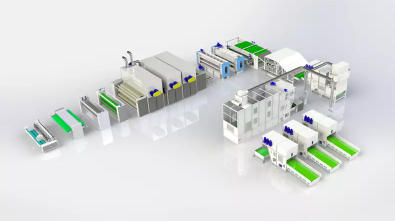
Meltblown technology is essential for producing ultra-fine fibers that offer exceptional filtration and material performance. These machines are indispensable for industries where precision and high-quality filtration are critical, including healthcare and environmental solutions.
Key Features: Meltblown machines are capable of producing extremely fine fibers, ranging from 2 to 5 microns in diameter. These fibers create a dense, nonwoven fabric with superb filtration properties. The meltblown process involves melting a polymer and forcing it through small nozzles to form fine, web-like structures.
Advantages: The main benefit of meltblown machines is their ability to produce highly uniform and fine fibers that meet stringent filtration standards. These machines are especially effective at trapping particles, which makes them ideal for creating materials used in medical masks, air filters, and oil spill absorption products. Additionally, meltblown fabrics are lightweight, breathable, and highly effective at providing protection from contaminants.
Applications: Meltblown fabrics are crucial in the healthcare sector for applications such as surgical masks, N95 respirators, and sterilization wipes. They are also used in industrial filtration, including HVAC filters, oil-water separation media, and environmental solutions like oil spill absorbents. Meltblown fabrics are a key component in meeting high standards for air quality and contamination control.
Meltblown technology plays a critical role in healthcare, filtration, and environmental applications, providing materials that deliver superior protection and meet high safety standards. Whether you're producing personal protective equipment or industrial filters, meltblown machines offer the precision required to meet demanding industry needs.
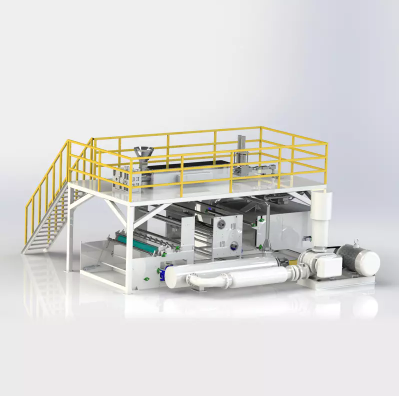
Needle punching machines are designed for creating heavy-duty, durable fabrics by mechanically entangling fibers. This process results in fabrics that are strong, stable, and capable of withstanding significant stress and environmental wear. Needle punching is ideal for applications where durability and performance are paramount.
Key Features: These machines use barbed needles that punch through layers of fiber, entangling them into a dense fabric. The result is a durable, dimensionally stable material that is highly resistant to wear and tear. The fabric created by needle punching machines is versatile and can be tailored to meet specific needs based on thickness, weight, and texture.
Advantages: One of the key advantages of needle punching machines is their ability to create fabrics with exceptional strength and resilience. These machines are capable of producing materials that withstand harsh conditions, making them ideal for industries that demand high-performance textiles. They are also energy-efficient, requiring less power compared to other bonding methods.
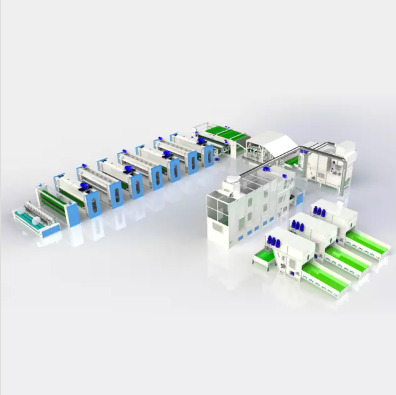
Applications: Needle punching machines are widely used in applications such as geotextiles, automotive interiors, and industrial padding. They are also commonly used in filtration materials, acoustic insulation, and products that require heavy-duty performance. Industries such as construction, automotive manufacturing, and geotechnical engineering rely heavily on these machines to create durable, high-performance fabrics that last longer and perform better in demanding environments.
For industries needing heavy-duty fabrics, needle punching machines are the perfect solution. Whether for construction, automotive, or geotechnical applications, these machines ensure that the resulting fabrics are not only durable but also cost-effective, making them an excellent choice for large-scale industrial production.
| Machine Type | Key Features | Speed | Production Capacity | Applications |
|---|---|---|---|---|
| PP Spunbond Machines | High-speed production, versatile fiber handling | 350 meters/min | 5000 kg/day | Medical face masks, hygiene products, agriculture, construction |
| Meltblown Machines | Ultra-fine fiber production, high precision | Varies (micron level) | 2000 kg/day | Surgical masks, sterilization wipes, air filters, oil spill adsorbents |
| Needle Punching Machines | Durable fabric production, mechanical bonding | Moderate speed | 1500 kg/day | Geotextiles, automotive interiors, industrial padding |
When evaluating different non-woven fabric production lines, it’s important to assess a variety of factors to ensure the chosen system meets your production needs:
Production Capacity: Understand whether the production line can meet your expected output without compromising fabric quality. Machines with higher production capacities are often faster but may require more maintenance.
Fiber Compatibility: Confirm that the production line can handle the specific fibers you intend to use, such as polypropylene, polyester, or natural fibers.
Bonding Techniques: Depending on the intended fabric properties (strength, flexibility, softness), select the right bonding method (mechanical, thermal, or chemical).
Automation: Opt for a production line that includes advanced automation to improve operational efficiency, reduce errors, and increase consistency.
To make an informed decision, compare the performance metrics of different machines. Here’s a quick comparison of key aspects:
| Machine Type | Max Speed | Production Capacity | Fiber Compatibility |
|---|---|---|---|
| PP Spunbond | 350 m/min | 5000 kg/day | Polypropylene, Polyester |
| Meltblown | Varies (micron-level) | 2000 kg/day | Polypropylene, PET |
| Needle Punching | Moderate | 1500 kg/day | Synthetic Fibers, Nylon |
These differences in speed, production capacity, and flexibility are critical when determining which machine best suits your needs. For instance, PP spunbond machines are ideal for faster production, while meltblown machines are more specialized for fine fibers.
Different applications require specific fabric properties. Meltblown machines, for example, are best suited for medical filtration applications, while needle punching machines are perfect for durable, heavy-duty fabrics needed in construction and automotive industries. Understanding the desired fabric characteristics will guide you in selecting the appropriate production line.Customizing production lines allows manufacturers to cater to various market demands, from medical-grade fabrics to geotextiles and industrial padding.
With the growing emphasis on sustainability, many manufacturers are turning to energy-efficient production lines to reduce their environmental impact. These production lines are designed to consume less energy and generate less waste while maintaining high production standards.
Energy Efficient Machines: Modern machines are equipped with technologies that optimize energy consumption, reducing the overall environmental footprint of production.
Waste Reduction: Automation systems ensure that raw materials are used efficiently, minimizing scrap and excess waste.
The shift toward sustainable manufacturing is also evident in the adoption of recyclable and biodegradable materials in production lines. These materials help reduce the environmental impact of non-woven fabric production and meet the growing consumer demand for eco-friendly products.
Recyclable Materials: Many non-woven fabric production lines now use recycled fibers, such as PET, to create fabrics, reducing dependence on virgin materials.
Biodegradable Fabrics: Manufacturers are increasingly producing biodegradable non-woven fabrics, which break down over time and reduce landfill waste.
Implementing eco-friendly production techniques helps companies stay compliant with environmental regulations while appealing to consumers who prioritize sustainability.
The meltblown production line has proven essential in the production of medical-grade materials. For example, during the COVID-19 pandemic, meltblown technology was used extensively to produce face masks, which required high filtration efficiency. Beyond healthcare, meltblown fabrics are also used in air filtration systems, oil spill absorption, and water purification.
In large-scale manufacturing environments, PP spunbond machines are the most efficient for producing high volumes of non-woven fabric. These machines have been key in the production of hygiene products like diapers and adult incontinence pads, where the demand for lightweight, breathable fabrics is high. Their ability to produce large quantities quickly while maintaining fabric quality makes them invaluable to the hygiene and medical sectors.
Case studies show that selecting the right production line, based on your target market, can significantly improve product quality, reduce production costs, and increase overall profitability.
Selecting the right non-woven fabric production line is essential for achieving production goals and maintaining high fabric quality. PP spunbond machines are ideal for high-speed, large-volume production, while meltblown machines excel in precision filtration. Needle punching machines are designed for heavy-duty fabrics used in geotextiles and automotive applications.
As technologies evolve, focusing on automation and sustainability will drive success in production lines. Investing in the right machine not only boosts efficiency but also improves product quality and reduces operational costs.
Changshu Weicheng Nonwoven Equipment Co., Ltd. offers advanced non-woven fabric production solutions. In addition to the solutions mentioned in this article, the company also provides customized equipment for various non-woven fabric applications. Their products stand out for their flexibility, speed, and efficiency, catering to industries with diverse and specialized requirements.
A: A non-woven fabric production line is a system used to create fabrics without weaving or knitting. It involves processes like fiber feeding, web formation, bonding, and finishing, creating fabrics for various industries.
A: PP spunbond machines are designed for high-speed, large-volume production, while meltblown machines are used for precision filtration applications, producing ultra-fine fibers ideal for medical and environmental uses.
A: Automation in a non-woven fabric production line improves efficiency, reduces errors, and ensures consistent product quality. It helps minimize waste and lowers operational costs, leading to better profitability.
A: Needle punching machines produce durable, heavy-duty fabrics, ideal for geotextiles, automotive interiors, and industrial applications. They are known for their strength and resistance to wear and environmental stress.
A: A well-chosen non-woven fabric production line ensures high-quality fabrics by providing precise control over production speed, material properties, and consistency. The right machine improves product durability and performance.
A: The cost of a non-woven fabric production line depends on machine type, production capacity, automation features, and customization options. High-performance lines with advanced features typically have higher upfront costs but offer better long-term value.
A: Choosing the right non-woven fabric production line depends on your production goals, the fabric properties needed, and the type of materials used. Consider speed, capacity, and the type of bonding methods to match your industry requirements.