Views: 0 Author: Site Editor Publish Time: 2025-11-27 Origin: Site


Have you ever wondered how everyday products like surgical masks or automotive insulation are made? The answer lies in non-woven fabrics, a game-changer in modern manufacturing. Non-woven fabrics are produced using specialized non-woven fabric production lines, which are faster and more cost-effective than traditional methods. These materials are crucial across industries like healthcare, automotive, and construction.
In this article, we will explore how non-woven fabric production lines work. You'll learn about the production process, key technologies, and the benefits that make them so widely used.
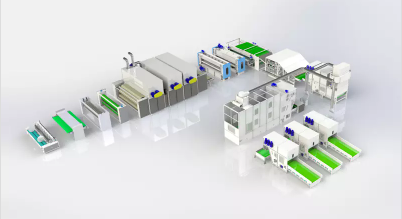
A non-woven fabric production line refers to a highly specialized and automated system that produces fabric by bonding fibers through mechanical, thermal, or chemical processes, without the need for spinning or weaving. Unlike traditional textile manufacturing, which involves spinning yarns and weaving them into fabrics, non-woven fabrics are created by directly bonding the fibers together. This process allows for the creation of fabrics with unique properties such as increased strength, softness, or absorbency, all of which can be tailored for specific applications.
This method of fabric production is advantageous because it is quicker and more cost-efficient than traditional methods. It also enables the production of high volumes of fabric that are ideal for disposable items like surgical masks, wipes, and insulation materials. In addition, non-woven fabrics are increasingly popular in industries that require specific functionality, such as medical, automotive, and filtration applications.
The production of non-woven fabric involves several key stages that ensure the final product meets the desired specifications:
Fiber Preparation: Raw materials are selected based on the desired properties of the final fabric.
Web Formation: The fibers are arranged into a loose web through various methods, depending on the type of fabric required.
Bonding: The fibers are bonded together to form a cohesive and durable fabric.
These stages are crucial in determining the quality and functionality of the final product. Each stage can be adjusted to produce fabrics with varying levels of strength, softness, absorbency, and durability.
Non-woven fabrics are highly versatile and used in a wide range of industries due to their unique properties:
Healthcare: Non-woven fabrics are used in medical gowns, face masks, sterile wound dressings, and surgical drapes due to their ability to provide a barrier against pathogens while remaining breathable and comfortable.
Automotive: Non-woven fabrics are applied in automotive interiors for insulation, soundproofing, and filtration. They are lightweight yet durable, making them ideal for automotive manufacturing.
Construction: Non-woven geotextiles are widely used in construction for soil stabilization, erosion control, and drainage applications.
Filtration: Non-woven fabrics are used in air and water filters due to their ability to trap particles effectively while allowing airflow or liquid passage.
The fiber feeding system is the first component of the production line, and it plays a crucial role in determining the quality and consistency of the final fabric. Raw fibers, which are often in the form of bales, pellets, or filaments, are loaded into the system where they are processed and prepared for the next stages. The choice of fiber is critical to the final product, as different fibers have different characteristics. Common fibers used in non-woven fabric production include polypropylene, polyester, and viscose. These fibers are selected based on the required properties of the fabric, such as strength, absorbency, and durability.
Once the fibers are prepared, they must be laid down into a web using various methods. The web formation process is vital in determining the structure, thickness, and uniformity of the fabric. Some of the most commonly used web formation methods include:
Carding: In this method, fibers are separated and aligned using a series of rotating rollers and brushes. The result is a thin, uniform sheet of fibers, which is ideal for creating lightweight fabrics.
Air-Laid: Air-laid technology uses air currents to disperse fibers onto a moving conveyor belt, where they settle into a uniform web. This method is often used for creating non-woven fabrics that require high absorbency, such as those used in hygiene products.
Spunbonding: In spunbonding, polymer granules are melted and extruded through fine nozzles to create continuous filaments. These filaments are then bonded together on a conveyor to form a strong, durable fabric. Spunbonded fabrics are often used in medical, automotive, and industrial applications.
Wet-Laid: Wet-laid technology involves suspending fibers in water and allowing them to settle onto a screen. The fibers are then dried and bonded together. This method is typically used for creating heavier fabrics with improved strength and durability.
Each of these methods results in a fabric with unique characteristics, such as thickness, strength, absorbency, and texture.
| Method | Description | Best For | Characteristics |
|---|---|---|---|
| Carding | Fibers are separated and aligned using a series of rotating rollers and brushes. | Lightweight fabrics | Produces a thin, uniform sheet of fibers. |
| Air-Laid | Air currents disperse fibers onto a moving belt, where they settle into a uniform web. | High absorbency fabrics | Ideal for hygiene products like wipes. |
| Spunbonding | Melted polymer is extruded through fine nozzles to create continuous filaments. | Industrial and medical fabrics | Strong and durable fabric. |
| Wet-Laid | Fibers are suspended in water and then bonded. | Heavy-duty fabrics | Strong, durable fabrics for industrial uses. |
After the fibers are arranged into a web, they need to be bonded to form a stable, cohesive fabric. There are three primary bonding techniques:
Mechanical Bonding: This method involves physically entangling the fibers through techniques like needle punching. This method provides a high level of strength and is often used for heavy-duty fabrics, such as those used in geotextiles or carpets.
Thermal Bonding: In thermal bonding, heat is applied to melt specific fibers, causing them to fuse together. This technique is highly efficient and creates fabrics that are strong and durable.
Chemical Bonding: Adhesives or binders are used to bond the fibers together. Chemical bonding offers flexibility in creating fabrics with customized properties, such as improved softness or increased water resistance.
| Bonding Technique | Description | Common Applications | Characteristics |
|---|---|---|---|
| Mechanical | Fibers are entangled using methods like needle punching. | Geotextiles, carpets | Provides high strength and stability. |
| Thermal | Heat is applied to melt fibers and bond them. | Medical fabrics, insulation | Quick and efficient, creating durable fabric. |
| Chemical | Adhesives or binders are used to bond fibers together. | Specialized fabrics (e.g., wipes) | Offers flexibility and custom properties. |
After bonding, the fabric may undergo various finishing processes to enhance its properties. Some of the most common finishing techniques include:
Coating: Adding a protective layer to the fabric, such as a waterproof coating or a flame-retardant layer.
Embossing: Creating patterns or textures on the fabric surface to improve its aesthetic appeal or provide functional properties, such as increased grip or reduced friction.
Drying and Calendering: Removing excess moisture from the fabric and smoothing it out to improve its appearance and texture.
These finishing processes are essential for adding the final touches to the fabric, making it suitable for its intended application.
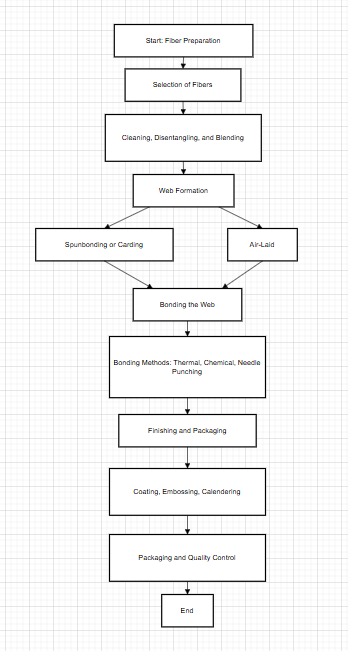
The production of non-woven fabrics begins with selecting the appropriate raw fibers. The type of fiber chosen is crucial because it directly affects the final fabric’s characteristics, such as its strength, softness, or absorbency. Polyester fibers, for example, are commonly used for their strength and durability, making them ideal for industrial applications. On the other hand, viscose fibers are chosen for their high absorbency, making them suitable for products like wipes and hygiene products.
Once the fibers are selected, they go through several preparatory steps. The fibers are cleaned to remove impurities, which could affect the quality of the fabric. Next, they are disentangled, as fibers often come in bales or compacted forms. The disentangling process helps separate the fibers to facilitate easier handling during the subsequent stages. Finally, the fibers are blended, if necessary, to achieve a consistent mix, ensuring uniformity throughout the production process.
After the fibers are prepared, the next step is to lay them out into a web. Web formation is a crucial step because it determines the overall structure of the fabric. Several methods are used to form the web, including carding, spunbonding, air-laid, and wet-laid.
In carding, fibers are separated and aligned in a sheet-like formation using a series of rotating rollers and combs. This method produces a thin, even sheet, ideal for lightweight fabrics. Spunbonding involves melting polymer granules, which are then extruded into fine filaments. These filaments are bonded together on a conveyor to form a strong, durable web. This technique is often used in applications requiring high strength, such as industrial or medical uses.
Alternatively, the air-laid method uses air currents to disperse fibers onto a moving conveyor belt, allowing the fibers to settle into a uniform web. This technique is particularly well-suited for producing fabrics that require high absorbency, like diapers, sanitary napkins, and other hygiene products. Each web formation method imparts unique qualities to the fabric, such as texture, strength, and thickness, allowing manufacturers to tailor the final product to specific needs.
Once the fibers have been arranged into a web, the next step is bonding them together to create a cohesive fabric. Bonding is critical in determining the fabric's overall strength, durability, and functionality. Several bonding methods can be used, depending on the desired end-use of the fabric.
Thermal bonding is the most commonly used method, where heat is applied to fuse the fibers together. This technique is quick and efficient, and it results in a fabric that is strong and uniform. Another method is chemical bonding, where adhesives or binders are used to bond the fibers. This method offers flexibility in terms of fabric properties and is often used for creating fabrics with unique characteristics, such as increased softness or water resistance. Lastly, needle punching, a mechanical bonding method, uses barbed needles to interlace the fibers, which provides additional strength and stability to the fabric. The bonding technique used is essential in ensuring the fabric meets the required performance standards for its intended application.
Once the fabric has been bonded, it often undergoes various finishing treatments to enhance its properties. Finishing processes, such as coating, embossing, and calendering, can significantly alter the fabric’s appearance, texture, and functionality. Coating involves applying a layer of material (such as a waterproof coating) to the fabric to improve its resistance to liquids or enhance other properties. Embossing adds patterns or textures to the fabric, which can be for both functional and aesthetic purposes. Finally, calendering smooths out the fabric by pressing it between rollers, improving its appearance and making it more uniform in thickness.
After the finishing steps, the fabric is ready for packaging. Before packaging, quality control checks are conducted at every stage of production to ensure the fabric meets the desired specifications. These checks may include tests for strength, absorbency, uniformity, and other critical factors. Once the fabric passes quality control, it is packaged for distribution, ensuring that the final product reaches the customer in the best possible condition.
Non-woven fabric production lines offer significant cost advantages compared to traditional textile manufacturing. By eliminating steps such as spinning and weaving, manufacturers can reduce labor and material costs. The automation of the production process further drives down operational expenses, making non-woven fabrics a cost-effective solution for a wide range of applications.
Non-woven fabric production lines provide manufacturers with high flexibility in creating fabrics tailored to specific applications. By adjusting the fiber types, web formation techniques, and bonding methods, manufacturers can produce fabrics with a wide variety of properties, including strength, softness, absorbency, and water resistance.
Non-woven fabric production lines are designed for high-speed output, which is essential for industries that require large volumes of fabric quickly. Automated production processes ensure consistent fabric quality and rapid turnaround times, enabling manufacturers to meet the demands of fast-paced industries.
Non-woven fabrics can be produced using biodegradable and recycled fibers, making them an eco-friendly alternative to traditional textiles. By adopting sustainable production practices, manufacturers can reduce their environmental impact and align with global sustainability goals.
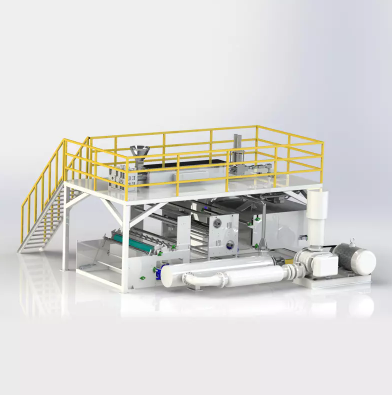
Automation has revolutionized non-woven fabric production, improving efficiency and reducing labor costs. By integrating sensors, real-time monitoring systems, and advanced robotics, manufacturers can track production progress and make adjustments in real-time, optimizing the production process.
Sustainability is a growing focus in the non-woven fabric industry. Manufacturers are increasingly using recycled fibers, reducing energy consumption, and adopting eco-friendly materials to create fabrics that meet sustainability goals. These practices help companies reduce their carbon footprints while producing high-quality materials.
The integration of AI and robotics into non-woven fabric production lines enhances precision, consistency, and speed. Robots can automate tasks such as fabric inspection and packaging, while AI algorithms analyze data to optimize the production process. This integration not only improves product quality but also reduces operational costs.
Non-woven fabric production lines are essential in creating fabrics used across industries like healthcare, automotive, and construction. Understanding the production process, from fiber preparation to finishing, is key for manufacturers to optimize efficiency. Ongoing advancements in technology, automation, and sustainability are shaping the future of non-woven fabric production.
For businesses seeking high-quality production solutions, CHANGSHU WEICHENG NONWOVEN EQUIPMENT CO., LTD. offers advanced non-woven fabric production equipment. Their products are designed to enhance efficiency and sustainability, providing valuable solutions for diverse industries.
A: A Non-Woven Fabric Production Line is an automated system used to produce fabric by bonding fibers through mechanical, thermal, or chemical processes, without the need for traditional weaving.
A: A Non-Woven Fabric Production Line works by preparing raw fibers, forming them into a web, bonding the fibers together using techniques like thermal or chemical bonding, and finishing the fabric with additional treatments.
A: The advantages include cost-efficiency, high-speed production, customization, and the ability to produce durable, absorbent fabrics for a wide range of applications.
A: Non-Woven Fabric Production Lines create fabrics ideal for medical products like face masks and gowns, offering high absorbency, strength, and a barrier against contaminants.
A: The cost is influenced by factors such as the type of equipment used, the production capacity, and the specific customization of the production line based on fabric requirements.