Views: 0 Author: Site Editor Publish Time: 2026-09-29 Origin: Site


Processing synthetic fibers like polyester (PET) and polypropylene (PP) introduces unique mechanical and thermal challenges that standard natural-fiber setups cannot handle without compromising web quality. Utilizing generic configurations for high-tenacity, low-moisture synthetic fibers results in static buildup, fiber fusion, excessive nep generation, and accelerated wire wear. These issues directly impact overall equipment effectiveness and yield. To mitigate these risks and ensure capital efficiency, technical buyers must evaluate equipment against a strict set of synthetic-specific criteria. This guide provides a comprehensive specification checklist for evaluating a carding machine for polyester and polypropylene, focusing on production outcomes and implementation realities.
Wire Geometry is Critical: Synthetic fibers require specific metallic wire profiles (e.g., negative or less aggressive working angles) to prevent fiber rupture and manage high crimp.
Static and Thermal Management: A viable carding machine for polyester and polypropylene must include integrated anti-static systems and optimized cylinder cooling to prevent fiber fusion at high production speeds.
Configuration Dictates Application: The choice between roller cards (standard for nonwovens) and modified revolving flat cards (for spun synthetic yarns) must align strictly with the target fiber denier and end-product requirements.
Vendor Evaluation Requires Trial Data: Procurement decisions should mandate vendor-run trials using the exact PET/PP fiber specifications (denier, cut length, spin finish) planned for production.
Table of Contents
PET and PP fibers differ greatly from natural fibers. Their high strength, low moisture absorption, and strong static generation require different carding strategies. Unlike cotton or wool, synthetic fibers tend to stretch, deform, and generate heat instead of breaking when exposed to excessive friction.
Spin finish plays a key role in synthetic fiber processing. Proper finish levels help fibers move smoothly through the carding system. Too little finish causes wire loading and heat buildup, while excessive finish increases fiber cohesion and reduces web uniformity.
Synthetic fibers require gentle and controlled carding. Wire interactions, clearances, and roller settings must be adjusted according to fiber denier and length. Excessive carding force can damage fibers, remove finish, and create thermal defects.
A suitable PET and PP carding system should provide stable web formation, consistent weight distribution, controlled fiber orientation, and minimal static generation. Proper mechanical design and environmental control are essential for maintaining synthetic fiber quality.
Fiber Property | Natural Fibers (Cotton/Wool) | Synthetic Fibers (PET/PP) | Impact on Machine Setup |
|---|---|---|---|
Moisture Regain | High (8-15%) | Near Zero (0-0.4%) | Requires active static elimination and climate control. |
Tenacity | Low to Medium | High | Demands robust wire metallurgy to prevent rapid wear. |
Thermal Sensitivity | Low (Burns at high temps) | High (Melts/Fuses) | Necessitates lower cylinder speeds and optimized aerodynamics. |
Crimp | Natural, irregular | Mechanical, highly uniform | Requires specialized pre-opening segments before the main cylinder. |
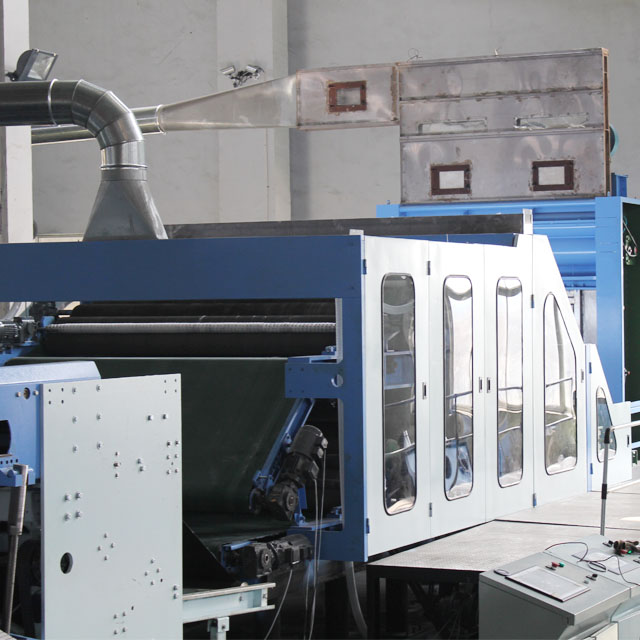
Synthetic fibers often arrive in dense bales with inconsistent bulk density. Gravimetric feeding systems provide more accurate mass flow control than volumetric systems, ensuring stable feed weight. The licker-in feeding zone requires strong fiber grip; high-pressure fluted feed rollers prevent large tuft plucking, reduce nep formation, and protect carding components.
Cylinder diameter and speed must be balanced to avoid excessive turbulence and heat generation during synthetic processing. Larger cylinders provide more carding area at lower speeds, improving fiber separation while reducing thermal damage. Efficient doffer systems ensure stable web transfer and can be optimized for uniform strength in nonwoven applications.
High-crimp synthetic fibers require gentle pre-opening before entering the main carding zone. Adjustable stationary carding segments reduce fiber stress and improve control. Smooth under-casing designs stabilize airflow, prevent fiber loss, and avoid unnecessary fiber rolling since synthetic materials generally contain fewer impurities than cotton.
Machine selection depends on the final product. Roller cards are preferred for nonwoven applications because their multi-stage worker and stripper systems provide strong opening, blending, and web formation. Modified flat cards are better suited for synthetic yarn production, where fiber alignment and controlled parallelization are more important.
Synthetic webs require careful condensing to avoid static buildup and drafting faults. Specially designed condensing rollers ensure smooth web gathering, while precision coiler systems prevent unwanted tension changes during sliver packaging. Stable delivery is essential for maintaining downstream drawing and spinning quality.
Card clothing selection directly affects synthetic fiber performance. Fine denier fibers require higher-density wire for effective separation, while coarse fibers need lower-density profiles to prevent breakage and loading. Less aggressive wire angles improve fiber stripping, and wear-resistant materials such as coated alloys extend clothing life when processing abrasive synthetic fibers.
Maximum machine speed does not always equal usable output. High-speed processing of fine synthetic fibers may cause static, heat buildup, and web defects. Buyers should evaluate real production data, including web uniformity and nep levels, rather than relying only on theoretical capacity.
High-speed operation requires precise tension control between the doffer, drafting system, and cross-lapper. Proper synchronization prevents web stretching, folding, and uneven weight distribution during downstream processing.
Synthetic fibers such as polypropylene and polyester require effective static management. Ionizing bars, grounding systems, and controlled transfer points help prevent fiber wrapping, production interruptions, and unstable web handling.
Machine enclosures help maintain stable temperature and humidity around the carding zone. Proper climate control reduces static buildup and improves fiber transfer reliability.
Synthetic processing creates spin finish deposits, dust, and fly waste that can affect machine stability. Strong, well-designed suction systems remove contaminants and prevent recirculation into the carding zone.
Easy access to suction ducts and waste collection areas simplifies cleaning and reduces downtime. Effective waste separation also improves material recovery and production efficiency.
Modern multi-motor inverter drives allow independent control of cylinders and rollers, enabling quick adjustments for different fiber types and production conditions.
Energy efficiency should be measured by power consumption per kilogram of output. Advanced drive systems reduce mechanical losses and improve overall production economics.
Switching from cotton to synthetic fibers requires updated operating knowledge. Polyester and other synthetics have different defects, wear patterns, and setting requirements. OEM training and digital HMI recipes help operators apply correct parameters and prevent improper adjustments.
High-speed synthetic processing requires strict safety management. Machine interlocks, protective covers, and emergency systems must be regularly checked to ensure safe operation during maintenance and production.
Synthetic fibers create faster wire wear due to continuous friction. Maintenance schedules must be adjusted based on actual wear conditions rather than traditional cotton timelines. Regular inspections, nep analysis, and timely grinding help maintain stable carding performance.
Preventive maintenance programs reduce quality fluctuations and downtime. Keeping trained technicians, proper grinding equipment, and wire servicing resources available ensures consistent web quality during long-term synthetic production.
A high-performance Carding Machine is only as effective as the line it operates within. Bottlenecking at the blow room or opening line starves the card, leading to irregular web weights. Conversely, bottlenecking at the draw frame or cross-lapper forces the card to slow down, disrupting the thermal and aerodynamic balance.
Seamless PLC integration across the entire production line is mandatory. The opening line must adjust its feed rate based on the card's chute level sensors. The downstream equipment must synchronize its speed with the card's delivery rollers. This closed-loop communication ensures continuous, stable production without manual intervention.
Draft a formal Request for Proposal (RFP) that includes your specific fiber data sheets, detailing denier, cut length, and spin finish type.
Schedule physical machine trials at the vendor's facility using your factory's actual raw materials to verify throughput and web quality.
Verify complete PLC compatibility between the proposed equipment and your existing upstream opening lines and downstream drafting or lapping systems.
Establish a clear predictive maintenance schedule for wire grinding and replacement based on the abrasive properties of your specific synthetic fibers.
A: Cylinder speed depends heavily on the fiber denier and machine type. Generally, polyester requires lower speeds than cotton to prevent thermal damage and static buildup. Speeds typically range between 300 and 500 RPM, depending on the cylinder diameter. Larger diameters allow for lower RPMs while maintaining the necessary surface speed for efficient carding.
A: Static is managed through a combination of active and passive systems. Machines utilize active ionizing bars at critical transfer points to neutralize static charges. Specialized grounding of all machine components provides a discharge path. Additionally, aerodynamic enclosures help maintain strict environmental humidity controls, which is vital for dissipating static in polypropylene.
A: No. While it might physically push the fiber through, a standard cotton setup will cause severe fiber damage, loading, and static issues. Processing polyester requires specific modifications, including less aggressive wire profiles, different cylinder speeds, solid under-casings, and active static elimination systems.
A: Fiber fusion occurs when excessive mechanical friction generates heat beyond the polymer's melting point. This is usually caused by running the cylinder at speeds that are too high for the specific fiber denier, or by using improper wire geometries that trap the synthetic fibers instead of releasing them cleanly.
A: Dull and semi-dull polyester fibers are manufactured with titanium dioxide additives to reduce their natural shine. This chemical is highly abrasive. Processing these fibers with standard steel wires leads to rapid wear and blunted points. Tungsten carbide coatings or specialized alloys are necessary to withstand this abrasion.
A: Spin finish dictates the friction levels between the fibers and the metallic wire. An optimal finish allows fibers to separate and transfer smoothly. Too little finish causes high friction, leading to wire loading and thermal damage. Too much finish makes the fibers sticky, resulting in poor individualization and uneven web formation.