Views: 0 Author: Site Editor Publish Time: 2026-09-29 Origin: Site


Maximizing production speed in textile and nonwoven manufacturing often comes at the direct expense of web uniformity and fiber integrity. Plant engineers and production managers face a constant bottleneck on the factory floor. Pushing a machine beyond its optimal variable thresholds leads to nep formation, severe fiber breakage, machine choking, and degraded Overall Equipment Effectiveness (OEE). You cannot simply turn up the dial and expect high-quality output.
Achieving peak operational capacity requires a precise understanding of the specific fiber characteristics and web parameters that dictate true throughput. Every adjustment impacts the delicate balance of fiber individualization. This guide breaks down the technical variables controlling output and explains how to evaluate machine capabilities for your specific production line. Understanding carding machine throughput factors ensures you maximize yield without compromising the structural integrity of your final web.
Throughput is not a static metric: Actual yield is heavily dictated by fiber fineness (denier/micronaire), staple length, and moisture content, which can reduce theoretical maximum speeds by up to 30% to maintain quality.
Initial opening dictates downstream speed: Licker-in efficiency and pre-opening preparation are often the hidden bottlenecks before fiber even reaches the main cylinder.
Web weight dictates mechanical limits: Target GSM (Grams per Square Meter) directly influences cylinder loading limits and doffer transfer efficiency, forcing a trade-off between web thickness and line speed.
Card clothing is the primary bottleneck: Pushing throughput without matching wire geometry to the specific fiber type accelerates wear and increases downtime, negating any speed gains.
Configuration dictates scalability: Evaluating single versus double cylinder setups, working widths, and autolevelling systems is critical for facilities looking to scale output without sacrificing fiber parallelization.
Table of Contents
You must differentiate between theoretical machine capacity and actual operational throughput. Theoretical capacity represents the maximum kilogram-per-hour output stated by original equipment manufacturers under perfect conditions. Actual throughput measures the true yield after accounting for quality control rejections. You must factor in routine stripping cycles, maintenance downtime, and web breaks. Real-world success depends entirely on sustained output without compromising web integrity. A machine running at maximum speed is useless if it produces high defect rates. You must evaluate production based on usable, first-quality material generated per shift.
Theoretical vs. Actual Throughput Metrics | |||
Metric Category | Theoretical Capacity | Actual Operational Yield | Primary Variance Factors |
|---|---|---|---|
Production Rate | OEM stated maximum (e.g., 1500 kg/hr) | Measured output at the winder (e.g., 1100 kg/hr) | Fiber type, target GSM, maintenance stops. |
Machine Uptime | 100% continuous operation | Typically 75% to 85% in high-speed runs | Wire stripping, choke clearing, lap removal. |
Web Quality | Perfect uniformity assumed | Subject to CV% variations and nep generation | Cylinder loading, doffer transfer efficiency. |
Material Waste | 0% waste assumed | 2% to 5% fly, droppings, and edge trim | Licker-in speed, mote knife settings, fiber length. |
The physics of carding action require a delicate balance. Increasing feed rates without adjusting drafting ratios prevents sufficient fiber individualization. The main cylinder must comb and separate tufts effectively to create a uniform web. Pushing too much mass through the wire teeth reduces this critical combing action. Fibers clump together under high volume, forming neps and thick places in the web. You must balance speed against the mechanical limits of the wire geometry. Aggressive speeds often lead to fiber rupture, which degrades yarn strength or nonwoven tensile properties. Speed increases must align proportionally with cylinder and doffer speeds to maintain drafting equilibrium.
When you increase the feed roller speed to push more mass into the machine, the licker-in must work harder to open the tufts. If the licker-in cannot keep up, large clumps of unopened fiber transfer to the main cylinder. The main cylinder wire then fills up rapidly. This phenomenon, known as cylinder loading, completely destroys the carding action. The machine stops combing and starts rolling the fibers into tight knots. To maintain quality at higher throughputs, you must increase the cylinder RPM to generate more combing points per minute. However, higher cylinder RPM increases centrifugal force, which can throw fibers off the cylinder prematurely if the aerodynamic covers are not perfectly adjusted.
Plant managers must track specific data points to evaluate true performance. Establishing these baselines allows you to measure the impact of any speed adjustments accurately. Without hard data, throughput optimization becomes a guessing game that usually ends in degraded product quality.
Measure production rate strictly in kilograms per hour of usable web at the end of the line.
Calculate web uniformity expressed as the coefficient of variation (CV%) using an inline scanner.
Count neps per gram of processed fiber using standardized laboratory testing equipment.
Determine fiber damage percentage by comparing staple length before and after the carding process.
Calculate true Overall Equipment Effectiveness (OEE) over a standard production shift, factoring in all micro-stops.
Record the frequency of manual interventions required to clear chokes, lapping, or edge tears.
Monitor the power consumption of the main cylinder motor to detect early signs of wire loading.
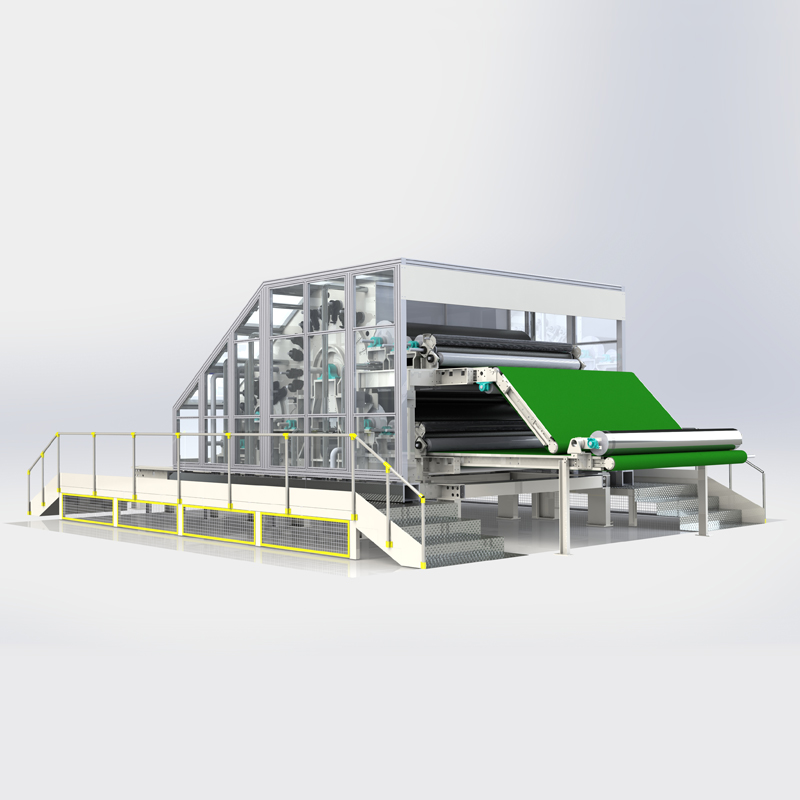
Fiber fineness directly affects carding capacity because finer fibers create more fiber volume per kilogram and require more individualization. Microfibers and low micronaire cotton need slower speeds to prevent cylinder loading and nep formation. Coarse fibers have fewer fibers per unit weight and tolerate higher speeds more easily. For mixed production schedules, the finest fiber type should determine the maximum operating speed to maintain stable web quality.
Fiber length and crimp structure determine how aggressively the card can process the material. Long fibers require wider settings and controlled speeds to avoid breakage and excessive short fibers, while highly crimped fibers need careful tension management because they resist drafting. Short fibers allow tighter settings and faster operation but require control to minimize fly waste. Proper adjustment of speed, spacing, and tension prevents quality loss during high-speed production.
Fiber finish and moisture level strongly influence friction, static buildup, and machine stability. Incorrect finish levels can cause fibers to wrap around cylinders and rollers, creating frequent stoppages. Controlled humidity and proper moisture balance reduce static and improve fiber movement through the carding process. However, excessive moisture or lubrication can increase stickiness and cause wire loading, so maintaining the correct processing environment is essential.
Fiber blends reduce the maximum achievable throughput because different fibers respond differently to carding forces. Variations in length, crimp, and friction can create drafting problems, fiber separation, and uneven webs. The machine must be adjusted according to the most sensitive fiber in the blend, not the strongest component. Conservative speeds and optimized licker-in settings help maintain uniform mixing and prevent defects such as neps and streaks.
Impact of Fiber Variables on Carding Speed | |||
Fiber Variable | Condition | Impact on Throughput Speed | Required Operational Adjustment |
|---|---|---|---|
Fineness | Microfiber / Low Denier (<1.2d) | Significant Reduction | Lower feed rate, increase cylinder speed slightly, use dense wire. |
Fineness | Coarse / High Denier (>6.0d) | Increase Possible | Increase feed rate, monitor doffer transfer, use open wire. |
Staple Length | Long Staple (>51mm) | Moderate Reduction | Widen roller settings, reduce draft ratios, lower licker-in RPM. |
Moisture | Low Humidity / Dry (<45% RH) | Severe Reduction (Stoppages) | Add humidification, apply anti-static finish, reduce speed. |
Crimp | High Crimp Frequency | Moderate Reduction | Adjust feed roller tension, monitor web bulk, check transfer rollers. |
The licker-in controls the first stage of fiber opening and directly influences the maximum operating speed of the card. If the speed is too low, large fiber tufts remain unopened and overload the main cylinder, increasing nep formation. Excessive speed damages staple length and reduces fiber quality. Proper licker-in adjustment, including the feed plate setting based on fiber length, ensures gentle but complete opening and allows the main cylinder to operate efficiently at higher throughput.
Target web weight determines the balance between production speed and quality stability. Heavy webs require lower speeds because the carding system handles greater fiber volume, while lightweight webs demand precise tension control to avoid drafting problems. High-speed production requires closed-loop autolevelling systems that continuously adjust feed rates according to mat thickness, maintaining consistent GSM and preventing weight variations.
Carding capacity depends heavily on cylinder wire design, including tooth height, angle, and density. When feed rates exceed the wire’s holding capacity, fibers overload the cylinder surface, reducing carding efficiency and increasing defects. High-throughput synthetic processing requires deeper wire profiles for greater fiber retention, while fine fibers benefit from higher-density clothing for better individualization. Correct wire selection prevents the machine from losing quality while operating at maximum production rates.
Card Clothing Specifications for High Throughput | ||||
Fiber Type | Target Throughput | Recommended PPSI | Front Angle | Tooth Depth |
|---|---|---|---|---|
Fine Synthetics (1.2d - 2.0d) | Medium to High | 700 - 900 | 65° - 70° | Shallow |
Coarse Synthetics (6.0d - 15d) | Very High | 300 - 450 | 75° - 80° | Deep |
Cotton (Medium Staple) | High | 800 - 1000 | 60° - 65° | Medium |
Recycled Blends / Shoddy | Medium | 250 - 400 | 80° - 85° | Very Deep |
The doffer must efficiently strip individualized fiber from the main cylinder. Transfer efficiency drops significantly at excessively high operational speeds. You must balance cylinder revolutions with doffer speed to ensure complete fiber removal. Poor transfer efficiency leads to fiber recirculating around the main cylinder. This recirculation causes neps, edge tearing, and inconsistent web formation.
You must optimize the setting distance between the cylinder and doffer. A tighter setting (e.g., 0.1mm) improves transfer at high speeds but risks catastrophic metal-to-metal contact if bearings wear down or thermal expansion occurs. Precise mechanical alignment ensures maximum doffer efficiency. The doffer wire must have a highly aggressive front angle to grab the fiber from the fast-moving cylinder. If the doffer fails to clear the cylinder, the incoming fiber from the licker-in has nowhere to go, resulting in an immediate machine choke.
Single-cylinder cards suit standard fiber applications, while double-cylinder systems improve performance for demanding materials and high-speed production. By dividing the carding process into pre-opening and fine individualization stages, double cylinders reduce component stress, improve fiber separation, and support higher throughput. This design is especially effective for fine denier and blended synthetic fibers where stable quality is required at elevated production rates.
Increasing machine width is an efficient way to raise production capacity without increasing fiber stress or operating speed. However, wider cards require highly uniform feeding systems to maintain consistent web weight across the entire width. Advanced chute feeders with controlled airflow provide even fiber distribution, preventing heavy edges, thin centers, and quality variations during high-volume operation.
High-speed carding requires precise environmental control to maintain stable production. Controlled temperature and humidity reduce static buildup, prevent fiber lapping, and stabilize synthetic fiber processing. Dedicated HVAC systems, localized air conditioning, and airflow management around feeding and drafting zones help maintain consistent web quality despite changes in external conditions.
Excessive feed rates overload the cylinder, causing higher nep counts, uneven webs, and possible machine shutdowns. Operators should monitor web appearance closely, as cloudy or thickened fibers indicate early signs of overloading. Establishing feed limits based on fiber properties and using real-time quality monitoring helps prevent choking and maintain stable production.
High-throughput processing accelerates wire wear, especially when handling abrasive or contaminated fibers. Dull card clothing reduces carding efficiency and forces slower production speeds. Using wear-resistant wire materials, monitoring sharpness, and maintaining regular grinding schedules are essential to sustain high output without sacrificing web quality.
Higher production speeds increase fiber and dust buildup on card clothing, leading to more frequent cleaning and downtime. A slightly lower running speed may deliver better overall productivity by reducing interruptions. Maintenance intervals should be based on processed material volume rather than operating hours to ensure consistent carding performance.
Conduct a controlled trial run using your facility's specific fiber blend to establish empirical throughput limits before adjusting production schedules.
Upgrade card clothing metallurgy to hardened steel if you plan to process abrasive recycled fibers at high speeds.
Install closed-loop autolevelling systems to maintain consistent web weight during feed rate fluctuations.
Calibrate licker-in speeds to perfectly match new feed rates, preventing initial fiber rupture and downstream defects.
Implement strict HVAC controls to maintain optimal relative humidity, eliminating static-induced machine stoppages.
A: The primary factors include fiber fineness (denier/micronaire), staple length, target web weight (GSM), licker-in efficiency, cylinder speed, doffer transfer efficiency, and the specific geometry of the card clothing.
A: Finer fibers (lower denier) require more intense carding action to separate and parallelize. They generally require slower throughput speeds to prevent fiber damage, cylinder loading, and nep formation compared to coarse fibers.
A: The licker-in dictates the initial opening of the fiber tufts. If its speed does not match the feed rate, it plucks large clumps or causes severe fiber rupture, permanently degrading web quality before main carding begins.
A: Double-cylinder configurations distribute the intense mechanical work across two stages. This reduces the load on individual wires, allowing higher feed rates and better parallelization without overwhelming a single main cylinder.
A: Cylinder loading occurs when fibers completely fill the spaces between the wire teeth. This happens when feed rates exceed the wire's physical capacity, causing the machine to roll fibers into neps instead of combing them.
A: Optimal moisture acts as a natural lubricant and reduces static electricity. Too little moisture causes static buildup and fiber lapping, while too much causes fibers to stick. Proper humidity enables higher sustained running speeds.
A: Yes, increasing the working width provides a linear method to boost throughput. A wider machine processes more mass without increasing fiber stress or machine RPM, provided the chute feed maintains cross-machine uniformity.