Views: 0 Author: Site Editor Publish Time: 2026-09-29 Origin: Site


The structural integrity and uniformity of a needle-punched nonwoven fabric are determined long before the web reaches the needle loom. They rely entirely on the precision of your blow room and pre-carding preparation. Plant managers constantly face a difficult trade-off on the production floor. You want to maximize production speed, but you must maintain fiber integrity. Incorrect opening intensity leads to severe downstream processing failures. Over-opening causes immediate fiber breakage and rapid nep formation. Under-opening damages expensive card clothing, reduces cleaning efficiency, and creates highly uneven web profiles. Establishing a systematic approach to setting opening intensity requires analyzing specific fiber specifications and calibrating machine clearances accurately. You must understand the direct correlation between pre-carding preparation and final web tensile strength. This guide provides a technical framework for optimizing these parameters on the production floor. We outline how to calibrate equipment, balance throughput with quality, and prevent common processing defects.
Balancing Intensity and Integrity: Higher opening speeds increase cleaning efficiency and individualization but exponentially increase the risk of nep generation and staple length reduction.
Fiber-Specific Calibration: Optimal settings depend strictly on fiber denier, staple length, crimp, and trash content; there is no universal setting for a Fiber Opening Machine.
Clearance is Critical: The distance between feed rollers and opening beaters dictates the mechanical work applied to the fiber tufts, directly impacting the carding machine's ability to form a uniform web and extract impurities.
Downstream Impact: Poor opening intensity manifests as needle breakage, uneven draft ratios, and compromised tensile strength during the needle-punching phase.
Table of Contents
The primary goal of fiber opening is to reduce large fiber tufts into smaller, uniform bundles without damaging individual fibers. A well-prepared feed mat ensures stable carding performance, preventing density fluctuations that cause uneven web weight and poor quality. Proper opening allows the main cylinder and worker rollers to operate efficiently by providing a consistent fiber supply.
During opening, fibers are gradually separated while removing dust, short fibers, and foreign materials. This cleaning step is especially important for natural fibers and recycled materials, where impurities can damage card clothing and reduce machine efficiency. Progressive opening improves fiber individualization and creates a cleaner, more stable material flow into the carding process.
The blow room must deliver a continuous and consistent fiber mat to the card. Variations in tuft size or feed density create weak points that the carding machine cannot fully correct. Accurate calibration of opening equipment ensures stable material flow, uniform web formation, and improved downstream production efficiency.
The typical fiber preparation process follows a progressive reduction path:
Bale Plucking: Removes large fiber blocks from compressed bales.
Coarse Opening: Breaks large tufts into smaller bundles.
Blending: Creates a uniform mixture of different fibers.
Fine Opening: Produces smaller micro-tufts for carding.
Pneumatic Transport: Delivers prepared fibers to the card feeder.
Properly opened fibers improve carding efficiency and support better needle-punching performance. Uniform fiber distribution allows needles to penetrate consistently and create stronger fiber entanglement. Poorly opened tufts can cause needle deflection, uneven bonding, and reduced fabric strength. A controlled opening process is therefore essential for producing stable, high-quality nonwoven materials.
Opening intensity must match the physical properties of the fiber. Longer staple fibers require gentler action and wider clearances to prevent breakage, while shorter fibers can tolerate higher speeds and tighter settings. Fiber length should always be measured before adjusting machine parameters to avoid unnecessary degradation.
Fiber fineness and crimp determine how aggressively the material can be processed. Fine denier fibers are more prone to tangling and static buildup, while high-crimp fibers require controlled opening to preserve their bulk and resilience. The objective is to separate fibers without damaging their natural structure.
Different materials require different opening strategies. Clean synthetic fibers mainly need separation and individualization, while recycled materials and natural fibers require stronger action to remove dust and impurities. Operators must balance cleaning efficiency with the risk of shortening or damaging fibers.
Beater speed, clearance, and opening element design directly control processing intensity. Higher RPM increases mechanical impact and cleaning ability but can damage sensitive fibers. Spiked lattices provide gentler opening for long fibers, while saw-tooth wires deliver stronger action for difficult materials. Proper matching of machine settings to fiber type is essential for stable quality.
Virgin Polyester: Moderate speed and standard clearances; focus on fiber separation.
Recycled Shoddy: Stronger opening action to remove contaminants and break dense fiber bundles.
Fine Denier Polypropylene: Lower speeds and wider clearances to reduce static and nep formation.
Natural Wool: Gentle progressive opening to preserve staple length and natural crimp.
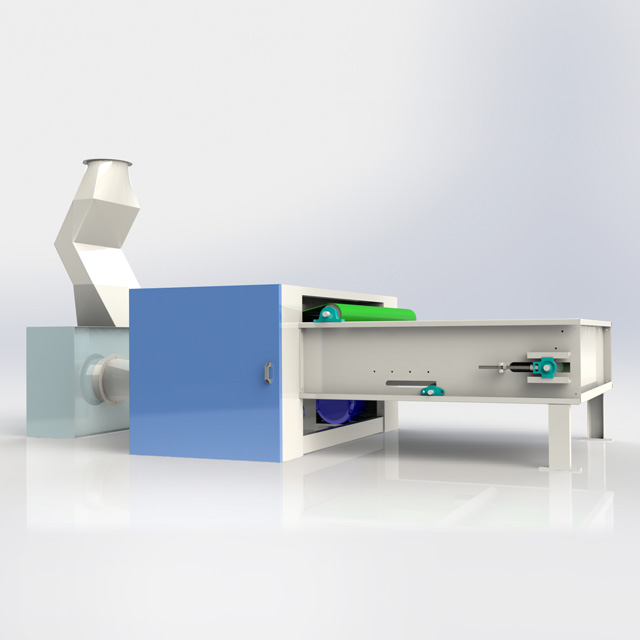
Opening intensity must balance cleaning efficiency with fiber protection. Excessive RPM and aggressive mechanical action may remove impurities effectively, but they also damage fiber length, increase dust generation, and create neps. Shortened fibers reduce interlocking ability during needle punching, lowering the strength and durability of the final nonwoven fabric.
Over-opening creates quality defects such as tangled fiber knots, uneven web formation, and reduced tensile performance. Once fibers are severely damaged, downstream carding cannot fully restore their original properties. Operators must avoid treating higher mechanical intensity as a direct path to higher quality.
Insufficient opening creates the opposite problem. Large, unopened tufts carry dust and impurities into the carding stage, increasing wire loading and accelerating clothing wear. These dense fiber clusters also cause uneven web weight, poor needle penetration, and inconsistent fabric strength.
The optimal setting requires a controlled balance between throughput, cleaning efficiency, and fiber preservation. High-performance applications such as geotextiles and automotive felts demand stable fiber individualization, because even small variations in tuft size can affect web uniformity and final product performance.
Operational State | Machine Settings | Primary Outcomes | Downstream Consequences |
|---|---|---|---|
Over-Opening | High RPM, Tight Clearance | Maximum trash removal, high fiber stress | Nep formation, fiber breakage, low tensile strength |
Optimal Opening | Calibrated RPM & Clearance | Micro-tuft formation, preserved staple length | Uniform web weight, efficient needle entanglement |
Under-Opening | Low RPM, Wide Clearance | Intact large tufts, poor trash removal | Card choking, high CV%, needle breakage |
Calibration begins with setting baseline operating conditions based on fiber type and OEM recommendations. Operators should avoid random adjustments and increase beater speed gradually, typically in small increments, while monitoring tuft size reduction, waste removal, and nep formation. The goal is to find the highest opening efficiency without damaging fiber quality.
Feed roller and beater clearances directly control opening intensity. Narrower settings improve cleaning and separation but increase fiber damage risk, while wider settings protect longer fibers. Precise gauge measurements and proper alignment across the machine width ensure stable feeding and prevent uneven fiber processing.
Pneumatic transport must match the output of the opening machine. Poor airflow can cause fiber recirculation, dust contamination, and secondary nep formation. Proper fan speed, damper adjustment, duct design, and filter condition are essential to maintain smooth material movement away from the opening zone.
Key airflow and transport checks include:
Verify extraction pressure meets system requirements.
Inspect ducts for sharp bends or flow restrictions.
Match condenser fan capacity with machine output.
Check filters for blockage and airflow reduction.
All adjustments should be recorded and converted into a settings matrix for different fiber blends. Regular reviews help compensate for component wear and maintain stable production performance. A documented calibration system reduces operator guesswork and improves consistency.
Web weight consistency provides direct feedback on opening performance. Inline scanners can detect GSM variations and identify density fluctuations caused by uneven tuft preparation. High CV% values often indicate problems originating from the opening stage rather than the carding machine itself.
Nep levels, dust removal, and remaining unopened tufts are important quality indicators. Excessive large tufts in the final web suggest insufficient opening intensity or incorrect clearance settings. Regular waste analysis helps confirm whether impurities are being effectively removed.
Opening quality directly affects needle-punching stability. Dense tufts and trapped impurities increase needle wear and breakage. Monitoring needle consumption provides an early warning of upstream opening problems and helps reduce production losses.
Quality data should guide machine adjustments. If tensile strength decreases, operators should check fiber damage and staple length before increasing mechanical intensity. A data-based feedbac
Conduct a baseline audit of your current tuft sizes pre-carding to establish a starting metric for improvement.
Measure your final web's nep count and trash content accurately using standardized lab testing procedures.
Incrementally adjust your opening machine's RPM and clearances using a strict 5% step-up protocol.
Document the optimal operational window for each specific fiber type and blend you process.
Implement a monthly visual inspection schedule for all pins, wires, and grid bars to prevent mechanical degradation.
A: The goal is to achieve a uniform, micro-tuft state. These tufts often weigh fractions of a gram. You must achieve this without inducing fiber breakage or creating neps. This ensures a continuous, smooth conversion from the feed mat to the final web.
A: Longer staple fibers require wider clearances between the feed roller and the beater. They also require lower rotational speeds. These adjustments are necessary to prevent the long fibers from snapping under excessive mechanical stress during the separation process.
A: Neps are typically caused by over-opening. Excessive beater speeds or clearances that are set too tight cause fibers to tangle. Dull opening pins that tear rather than cleanly separate the fibers also generate a high volume of neps.
A: Higher opening intensity generally improves cleaning efficiency. It aggressively separates fibers, allowing dust, short fibers, and trash to fall through the extraction grids. However, this aggressive action must be carefully balanced against the high risk of permanent fiber damage.
A: Signs of under-opening include large, dense tufts entering the card. You will also see poor extraction of impurities and uneven web weight. Frequent choking of the carding machine and poor fiber entanglement during needle-punching are clear indicators.
A: Yes. Low humidity increases static electricity, especially when processing synthetic fibers. This static causes fibers to cling to machine parts and clump together. This clumping completely negates the mechanical opening process and causes severe processing jams.
A: Replacement cycles depend heavily on production volume and fiber abrasiveness. Visual inspections for dullness, burrs, or missing pins should be conducted monthly. This ensures consistent opening intensity and maintains high cleaning performance across all production runs.