Views: 0 Author: Site Editor Publish Time: 2025-12-02 Origin: Site


Non-woven fabrics are revolutionizing industries worldwide. From medical masks to automotive insulation, these versatile materials are everywhere. As we approach 2025, significant advancements in Non-woven Fabric Production Lines are reshaping how these fabrics are made.
In this article, we'll explore the key technological trends driving the evolution of these production lines. You will learn how automation, sustainability, and smarter manufacturing techniques are transforming the non-woven fabric industry for the future.
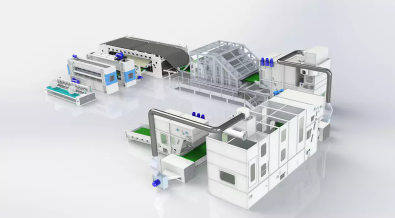
Over the years, non-woven fabric production methods have significantly advanced. Older techniques, such as needle-punching and wet-laid processes, required more manual labor and were less efficient. These methods are now being replaced by more automated, high-efficiency systems like spunbond and meltblown technologies. These newer processes not only produce better fabric consistency but also enable faster production speeds and reduced operational costs.
Spunbond technology, for instance, involves extruding molten polymer through a spinneret and bonding the fibers together as they cool. This method is widely used for creating durable fabrics for a variety of applications. On the other hand, meltblown technology uses high-pressure hot air to create finer fibers, which are particularly ideal for filtration products. These innovations have greatly enhanced the performance and versatility of non-woven fabrics, allowing production lines to meet the specialized needs of various industries.
| Method | Technology Type | Description | Key Applications |
|---|---|---|---|
| Needle Punching | Mechanical Bonding | Fibers are entangled through barbed needles. | Carpets, Industrial fabrics |
| Wet Laid | Chemical Bonding | Fibers are suspended in water and bonded using adhesives. | Filters, Wipes |
| Spunbond | Thermal Bonding | Molten polymer extruded and bonded as it cools. | Medical, Automotive components |
| Meltblown | Thermal Bonding | Fine fibers created by blowing hot air through molten polymer. | Filtration, Medical products |
The integration of software solutions, especially Manufacturing Execution Systems (MES), is transforming the way non-woven fabric production lines are managed. These systems allow for real-time monitoring of key production parameters, such as fiber uniformity, temperature, and humidity. By continuously tracking these variables, MES ensures that the production process remains within optimal conditions and helps prevent errors that could result in low-quality fabrics.
By incorporating MES, manufacturers can streamline their operations, reduce waste, and make real-time adjustments to improve efficiency. This software also facilitates predictive maintenance, which can alert producers when equipment is likely to fail, minimizing unexpected downtime.
Automation has become integral to non-woven fabric production. Robotic systems and AI-driven solutions are enhancing speed, precision, and reducing human error. These technologies handle repetitive tasks such as cutting, layering, and packaging, making the production process much more efficient and cost-effective.
AI takes this further by analyzing data from production lines and predicting when maintenance is needed, reducing the risk of unplanned equipment failures. With automated systems, the reliance on manual labor decreases, allowing manufacturers to produce more fabric in less time, with improved consistency.
Tip: Integrating AI-powered predictive maintenance into your production lines can ensure smoother operations and reduce costly downtime.
| Technology | Impact on Production Line | Key Benefits |
|---|---|---|
| AI & Machine Learning | Optimizes maintenance, improves production efficiency | Reduced downtime, better forecasting |
| Automation | Automates repetitive tasks like cutting and packaging | Increased speed, reduced errors |
| Manufacturing Execution Systems (MES) | Real-time monitoring of production conditions | Improved quality control, reduced waste |
| Advanced Bonding Techniques | Enhanced fabric strength and durability | Better product quality, high performance fabrics |
The trend toward increased automation is a major driver in non-woven fabric production. Machines are being designed to operate at faster speeds, improving production rates while maintaining high quality. This is essential as the demand for non-woven materials continues to rise.
Automation not only helps reduce human error but also leads to cost savings. It increases production capacity by enabling machines to run continuously, meaning that manufacturers can meet higher demand without compromising quality. With automation, companies can respond more quickly to market needs and reduce the overall cost of production.
Bonding is a critical step in non-woven fabric production because it determines the fabric’s strength, flexibility, and durability. As non-woven fabric production lines evolve, advanced bonding techniques, such as heat bonding and chemical bonding, are being used to enhance the properties of the fabric.
Heat bonding involves applying heat and pressure to fuse fibers, creating a strong, durable fabric. Chemical bonding, on the other hand, uses adhesives or resins to bond fibers together, which is ideal for fabrics that require extra flexibility or strength. These advanced bonding methods enable manufacturers to produce high-performance fabrics for demanding applications like medical, automotive, and industrial products.
As sustainability becomes increasingly important in manufacturing, the non-woven fabric industry is responding by adopting more eco-friendly materials and processes. Manufacturers are shifting to biodegradable fibers and recycled textiles to reduce their environmental impact. These alternatives not only meet consumer demand for sustainable products but also help companies reduce their carbon footprint.
Non-woven fabrics made from recycled PET bottles, for example, help address plastic waste issues while offering a cost-effective solution for manufacturers. Bio-based fibers made from renewable resources, such as corn starch or sugarcane, are also being adopted as alternatives to petroleum-based fibers, making non-woven fabric production more sustainable.
As sustainability becomes a core focus of the non-woven fabric industry, the adoption of biodegradable and recycled materials is becoming more widespread. These fibers, made from renewable resources or recycled products, offer an eco-friendly alternative to conventional fibers. Non-woven fabrics made from these materials decompose naturally, minimizing their impact on the environment.
Recycled materials, such as PET bottles, are particularly valuable, as they reduce the need for new raw materials while helping reduce waste. By adopting these materials, manufacturers can reduce their environmental impact while meeting growing consumer demand for more sustainable products.
Green manufacturing technologies are increasingly being integrated into non-woven fabric production lines to reduce their environmental footprint. These technologies include energy-efficient machinery, waste reduction processes, and water recycling systems, all aimed at minimizing waste and conserving resources during production.
For example, closed-loop water systems recycle water used in the production process, which helps reduce overall water consumption. Similarly, energy-efficient machines lower the carbon footprint of production lines while improving operational costs. These green manufacturing technologies allow manufacturers to operate more sustainably and increase efficiency at the same time.
As global environmental regulations become stricter, non-woven fabric manufacturers must adapt to meet new standards that focus on reducing energy consumption, minimizing waste, and using sustainable raw materials. Adopting eco-friendly production practices helps companies comply with these regulations, while also attracting eco-conscious consumers.
By staying ahead of regulatory changes and implementing sustainable practices, manufacturers can avoid penalties, improve their environmental performance, and enhance their reputation in the marketplace.
Non-woven fabrics are essential in healthcare applications, where they are used to make products such as surgical masks, gowns, wound dressings, and sterilization wraps. These fabrics are ideal for medical products because they provide excellent barrier protection against bacteria and viruses, which is essential in preventing the spread of infection in healthcare settings.
The demand for non-woven fabrics in healthcare is expected to continue growing, particularly as hygiene and infection control become more critical in response to the ongoing global health challenges. Innovations such as antimicrobial coatings and higher filtration efficiencies are driving the increased use of non-woven materials in medical products.
The automotive industry has embraced non-woven fabrics for a wide range of applications. These materials are used in the production of components like headliners, seat covers, and insulation. Non-woven fabrics are lightweight, durable, and cost-effective, making them ideal for automotive manufacturing, where reducing weight and improving efficiency are key goals.
In addition, non-woven fabrics are being increasingly used for sound insulation and thermal management in vehicles. This helps reduce noise inside vehicles, improving overall comfort. As demand for energy-efficient and lightweight vehicles grows, the use of non-woven fabrics in automotive applications will continue to rise.
Non-woven fabrics play a critical role in the construction industry, particularly in the form of geotextiles. These materials are used in soil stabilization, filtration, and drainage, helping to improve the strength and stability of infrastructure projects such as roads, bridges, and retaining walls.
As infrastructure development continues to grow globally, the demand for non-woven geotextiles is expected to increase, providing manufacturers with new opportunities to expand their market reach and cater to the growing needs of the construction sector.
| Industry | Application | Benefits |
|---|---|---|
| Healthcare | Surgical masks, gowns, wound dressings | Infection control, sterilization |
| Automotive | Seat covers, insulation, soundproofing | Lightweight, cost-effective |
| Construction | Geotextiles for soil stabilization | Strengthens infrastructure, drainage |
| Fashion | Lightweight, breathable fabrics | Comfort, versatility |
Adopting new technologies in non-woven fabric production requires significant investment in advanced machinery and automation systems. For smaller manufacturers, the upfront costs of upgrading to these technologies can be a major barrier. However, such investments are essential to remain competitive in a rapidly evolving industry.
One way to overcome this challenge is by implementing a phased approach to investment, prioritizing the most critical upgrades that offer the greatest return on investment. This allows manufacturers to gradually transition to more advanced production lines without overwhelming their financial resources.
As production lines become more automated and integrated with advanced software systems, maintaining equipment reliability and ensuring seamless software integration becomes increasingly important. Equipment breakdowns or software glitches can disrupt production and lead to costly downtime.
Investing in predictive maintenance systems, which use data to forecast when equipment may fail, can help reduce unexpected downtime and keep production running smoothly. Regular maintenance and software updates are also crucial for ensuring the reliability and efficiency of automated production lines.
Integrating new technologies into existing production lines can be challenging, particularly when it comes to compatibility between old and new equipment. Manufacturers may face difficulties in making sure that their production lines can efficiently use new machinery or materials without causing disruptions.
Partnering with technology providers who offer integration services and customer support can help smooth the transition to more advanced systems, ensuring that new technologies fit seamlessly into existing production workflows.
The integration of smart materials and nano-technology is expected to play a significant role in non-woven fabric production by 2025. Smart materials can respond to environmental stimuli such as temperature, moisture, or light, opening up new possibilities for industries like healthcare, automotive, and wearables.
Nano-technology will allow non-woven fabrics to offer enhanced properties, such as improved durability, self-cleaning capabilities, and even antimicrobial protection. These innovations will enable the development of new fabrics that cater to advanced applications and specialized industry needs.
The Asia-Pacific region is expected to experience the fastest growth in non-woven fabric production in the coming years. Rapid industrialization, increased disposable income, and growing demand for non-woven materials are driving market growth in countries like China and India. Manufacturers targeting these regions can capitalize on new opportunities in emerging markets.
As consumer demand for high-performance and sustainable non-woven materials continues to rise, manufacturers must embrace technological advancements to stay competitive. Innovations in eco-friendly production, automation, and smart materials will be key factors in achieving success in this rapidly changing market.
The future of non-woven fabric production lies in embracing technological innovations, such as automation and sustainable practices. Companies that adapt to these trends will thrive in 2025 and beyond. As demand for eco-friendly products increases, staying ahead of these developments ensures long-term success in a competitive market.
By investing in sustainable solutions and technological advancements, companies can strengthen their position. Changshu Weicheng Nonwoven Equipment Co., Ltd. offers high-quality nonwoven production lines that provide efficient, eco-friendly solutions, helping businesses stay competitive in the evolving market.
A: A Non-Woven Fabric Production Line refers to specialized machinery that produces fabrics without the traditional weaving process. Instead, fibers are bonded using mechanical, thermal, or chemical methods, such as spunbond, meltblown, and needlepunching.
A: Technological advancements, like automation and AI, optimize efficiency, improve quality, and reduce production costs. Non-woven fabric production lines now incorporate real-time monitoring systems for better quality control.
A: Automation and AI enhance production speeds, reduce human error, and improve predictive maintenance. This allows non-woven fabric production lines to meet increasing market demands while maintaining product consistency.
A: Sustainable practices, such as using biodegradable fibers and energy-efficient systems, help reduce waste and environmental impact. These advancements make non-woven fabric production lines more eco-friendly and cost-effective.
A: Upgrading a Non-Woven Fabric Production Line can involve significant investment, but it improves long-term efficiency, reduces labor costs, and ensures compliance with industry standards, offering a strong ROI.